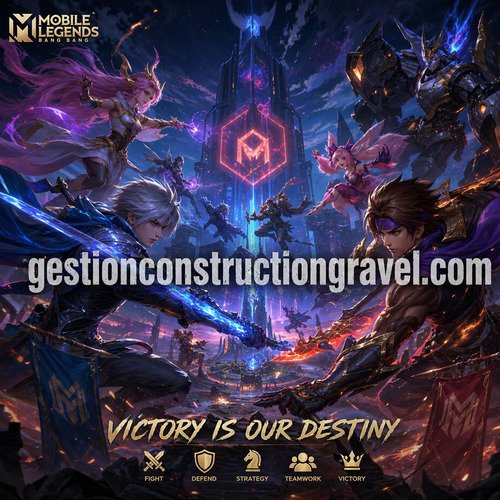
gestionconstructiongravel.com – Mobile Legends: Bang Bang is more than just a mobile MOBA; it is a fast-paced competitive arena where decision-making, mechanics, and teamwork define every match. While the game may look simple at first glance, climbing the ranked ladder requires a deep understanding of roles, map control, timing, and coordination. Players who consistently win are not necessarily those with the fastest fingers, but those who understand how the game flows from early laning to late-game teamfights.
This guide breaks down the core elements of gameplay, strategic team roles, and advanced tactics that can help transform a casual player into a consistent ranked performer.
Understanding Core Gameplay Mechanics of Mobile Legends
At the heart of Mobile Legends lies a structured battlefield where two teams compete to destroy each other’s base. Every match follows a rhythm: early game farming, mid-game rotations, and late-game team engagements. Understanding this flow is essential before focusing on advanced strategies.
The battlefield is divided into three main lanes: top, mid, and bottom, along with a jungle area that connects everything. Each lane serves a specific purpose depending on hero types and team composition.
The mid lane is usually occupied by mages or burst damage heroes because it offers quick access to both side lanes, allowing faster rotations. The gold lane, often the bottom lane, is typically assigned to marksmen who scale heavily with items and need uninterrupted farming. The EXP lane is usually for fighters or tanky heroes who can survive longer trades and benefit from experience advantage.
Map awareness is not just about knowing where enemies are, but predicting their movements. Skilled players constantly glance at the minimap to track missing enemies, anticipate ganks, and decide when to push or retreat. A single moment of awareness can prevent a fatal ambush or create an opportunity for a counterattack.
Farming and Gold Economy
Gold is the lifeline of every hero in Mobile Legends. Without proper farming, even the strongest hero will fall behind in damage and survivability. Last-hitting minions, securing jungle monsters, and participating in kills all contribute to gold income, but efficiency is what separates average players from high-ranked ones.
Junglers, in particular, must optimize their pathing. Instead of randomly clearing camps, they follow efficient routes that maximize experience gain and allow early ganks. Meanwhile, laners must balance aggression with farming, ensuring they do not miss waves of minions while chasing kills.
Gold leads often translate into item advantages, which then snowball into map dominance. A team that controls the economy controls the pace of the game.
Skills, Cooldowns, and Timing
Every hero in Mobile Legends has a unique skill set with cooldowns that determine when they can engage or disengage. Understanding these cooldowns is a fundamental skill that many beginners overlook.
For example, engaging an enemy right after they have used their escape skill or ultimate ability often guarantees a kill. Similarly, knowing when your own abilities will be available allows you to plan aggressive plays or defensive retreats more effectively.
Timing also plays a crucial role in team fights. Entering too early can lead to instant elimination, while entering too late might result in missed opportunities. The best players wait for the perfect moment—when key enemy skills are on cooldown or when opponents are out of position.
Strategic Team Play and Role Mastery
Winning in Mobile Legends is rarely about individual performance alone. The game is designed around teamwork, where each role contributes to a larger strategic goal. Understanding how each position functions within the team structure is essential for consistent success.
Tanks and roamers are the backbone of any team composition. Their primary role is to initiate fights, absorb damage, and provide vision across the map. While they may not deal high damage, their influence on the game is massive.
A good tank constantly checks bushes, scouts enemy movements, and protects more vulnerable teammates. Initiation is one of the most important aspects of this role. Engaging at the right moment can turn the tide of a teamfight instantly, while poor initiation can lead to disastrous outcomes.
Roamers also play a critical role in supporting early game aggression. By rotating between lanes, they help secure kills, assist in turret pressure, and provide crowd control during skirmishes. The best roamers are always one step ahead, predicting where help is needed before the situation becomes critical.
Damage Dealers and Positioning
Damage dealers, including marksmen and assassins, are responsible for eliminating key targets quickly. However, their effectiveness depends heavily on positioning and awareness.
Marksmen are particularly vulnerable in the early game, requiring protection from tanks and supports. As the game progresses, they become the primary source of sustained damage in team fights. Proper positioning allows them to attack safely while avoiding enemy assassins.
Assassins, on the other hand, rely on precision and timing. Their job is to eliminate high-priority targets such as enemy marksmen or mages. However, diving too early or without vision can lead to instant death. Successful assassins wait for the right moment, often entering fights from unexpected angles.
Supports and Utility Impact
Supports are often underestimated, but they are essential for sustaining team performance. They provide healing, shields, crowd control, and vision control that enable other roles to perform effectively.
A strong support player understands when to engage and when to peel for teammates. Instead of chasing kills, they focus on keeping key allies alive during critical moments. Their utility can disrupt enemy formations, making it easier for damage dealers to secure kills.
In coordinated teams, supports often act as the silent force that holds everything together, ensuring that fights remain controlled and organized.
Once the basics and role responsibilities are understood, the next step is mastering advanced strategies that separate casual players from high-ranked competitors. These strategies revolve around macro decisions, drafting, and team coordination.
Drafting and Hero Selection
Hero selection is one of the most underrated yet powerful aspects of Mobile Legends. A well-balanced team composition can win matches before they even begin.
Drafting involves selecting heroes that complement each other while countering enemy picks. For example, choosing crowd control-heavy tanks can neutralize mobile assassins, while burst mages can punish slow, tanky compositions.
Flexibility is key. Players who only master a single hero often struggle when their pick is banned or countered. Expanding hero pools allows for adaptability in different match scenarios and team needs.
Understanding synergy is equally important. Some heroes naturally work better together, creating powerful combinations that can dominate team fights or secure objectives quickly.
Objective Control (Turtles, Lords, Towers)
Winning in Mobile Legends is not just about kills. Objectives such as towers, turtles, and the Lord determine map control and long-term advantage.
The Turtle provides early-game gold and experience, giving teams a strong momentum boost. Securing it requires coordination and vision control, as it often becomes a contested battlefield.
The Lord, on the other hand, is a late-game objective that can end matches if used correctly. Once summoned, it applies pressure across lanes, forcing enemies to defend while your team pushes strategically.
Turrets remain the foundation of map control. Destroying them opens up the map, allowing deeper invasions and safer rotations. Teams that prioritize objectives over kills usually gain a stronger winning position.
Late Game Decision Making and Teamfights
The late game in Mobile Legends is where matches are decided. One mistake can lead to a full team wipe and the end of the game. This phase requires patience, discipline, and precise decision-making.
Teamfights in the late game are highly punishing. Every player must understand their role—whether to engage, protect, or eliminate key targets. Overextending or mispositioning can instantly turn the fight in favor of the enemy team.
Vision control becomes even more important at this stage. Checking bushes, avoiding ambushes, and maintaining map awareness are crucial to survival. Many games are lost simply because a team walks blindly into a trap.
Successful teams wait for the perfect opportunity—when enemy cooldowns are used or when opponents are separated. Instead of forcing fights, they create pressure and force mistakes.
Conclusion Mastering Mobile Legends: A Complete Guide to Gameplay, Strategy, and Winning Ranked Matches
Mobile Legends is a game that rewards both mechanical skill and strategic thinking. While individual performance matters, long-term success depends on understanding roles, managing resources, and coordinating effectively with teammates. From mastering basic mechanics like farming and map awareness to executing advanced strategies such as drafting and objective control, every layer of gameplay contributes to overall performance.
Players who climb the ranks consistently are those who adapt, communicate, and make smart decisions under pressure. By focusing on teamwork, timing, and game sense, anyone can improve their gameplay and enjoy a more competitive and rewarding experience in Mobile Legends.
